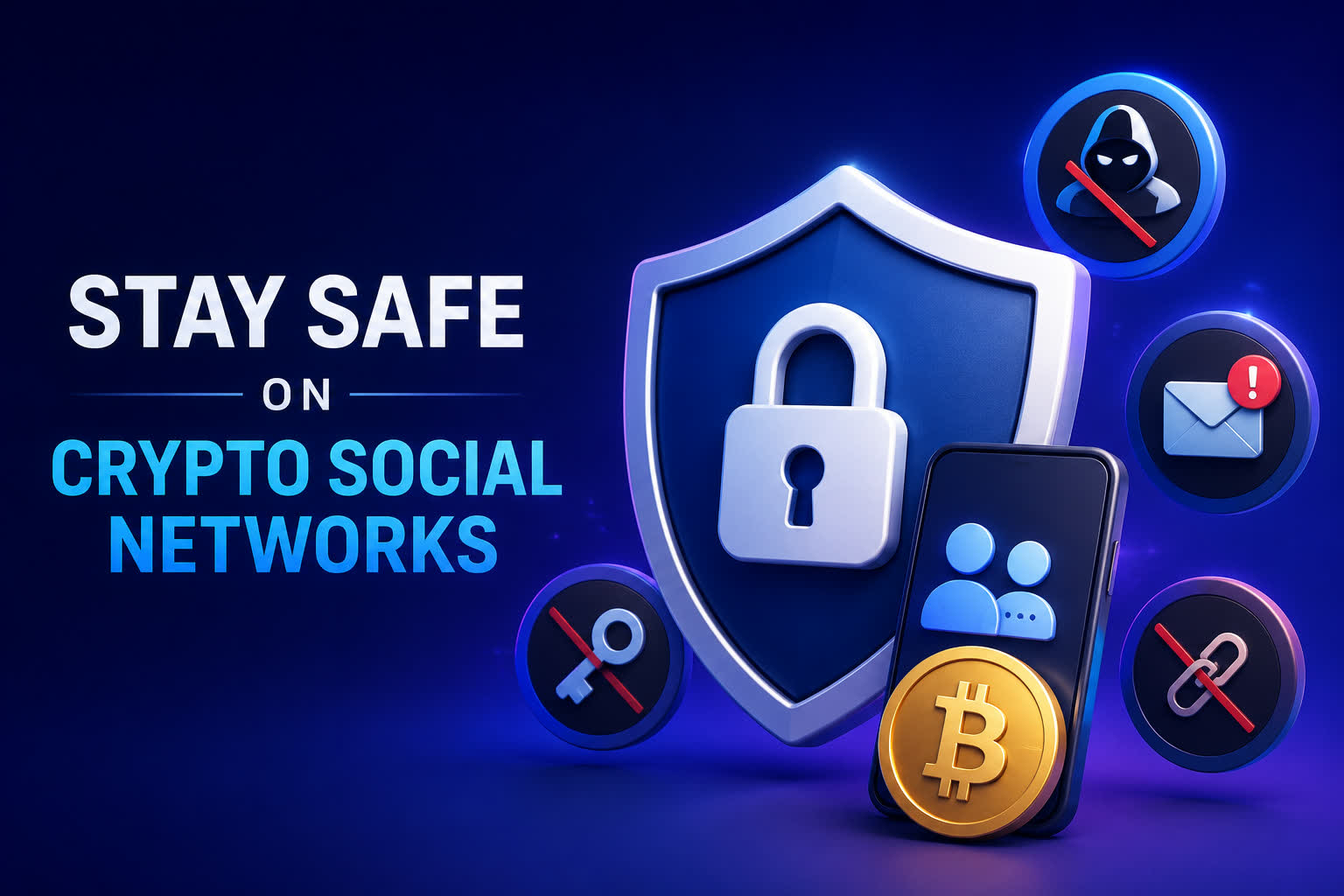
Crypto social networks are a great way to connect with like-minded people, discover new projects, learn about blockchain technology, and even earn rewards for your contributions.
But where there’s opportunity, scammers are never far behind.
The good news? You don’t need to be a cybersecurity expert to protect yourself. A few simple habits can dramatically reduce your risk and help you enjoy the crypto space safely.
Let’s dive in. 👇
1. Never Share Your Seed Phrase or Private Keys 🚫
This is the golden rule of crypto.
Your seed phrase is the master key to your wallet. Anyone who has it can access your funds.
No legitimate platform, moderator, support agent, or project team will ever ask for your seed phrase.
If someone asks for it, it’s a scam.
Always keep your seed phrase:
✅ Private
✅ Offline when possible
✅ Stored securely
2. Be Careful with Direct Messages 📩
Many scams begin with a friendly message.
A stranger might:
✅ Offer investment advice
✅ Promise guaranteed profits
✅ Claim you’ve won a giveaway
✅ Pretend to be support staff
Scammers often create fake profiles that look legitimate.
Before trusting anyone:
✅ Verify who they are
✅ Check their profile history
✅ Be skeptical of unsolicited offers
Remember: if it sounds too good to be true, it probably is.
3. Double-Check Every Link 🔍
Fake websites are one of the most common ways users lose their crypto.
A scammer may send a link that looks almost identical to a real website.
Before clicking:
✅ Read the full URL carefully
✅ Look for spelling mistakes
✅ Use bookmarks for frequently visited sites
✅ Avoid links from unknown sources
One wrong click can lead to a phishing page designed to steal your credentials.
4. Watch Out for Fake Giveaways 🎁
Crypto giveaways are popular and so are giveaway scams.
Be cautious if someone claims:
❌ Send 1 ETH and receive 2 ETH back
❌ Limited-time giveaway with unrealistic rewards
❌ Instant rewards for connecting your wallet
Legitimate giveaways do not require you to send funds first.
Always verify announcements through official channels.
5. Enable Every Security Feature Available 🛡️
Security features exist for a reason.
Whenever possible:
✅ Use a strong password
✅ Enable Two-Factor Authentication (2FA)
✅ Verify your email address
✅ Add account recovery options
These extra steps may take a few minutes, but they can save you from losing access to your account.
6. Don’t Trust Hype Alone 🚀
Crypto moves fast.
You will constantly see posts claiming:
✅ “100x opportunity!”
✅ “Next Bitcoin!”
✅ “Guaranteed moonshot!”
✅ “Buy before it’s too late!”
Take a step back.
Research the project.
Read multiple opinions.
Ask questions.
FOMO (Fear of Missing Out) is one of the most expensive emotions in crypto.
7. Verify Information Before Sharing 📰
Social networks spread information quickly.
Unfortunately, misinformation spreads quickly too.
Before reposting news:
✅ Check the original source
✅ Verify announcements
✅ Look for confirmation from trusted channels
Being accurate helps protect both yourself and the community.
8. Keep Your Wallet and Devices Updated 🔄
Software updates often include important security improvements.
Keep updated:
✅ Wallet applications
✅ Browsers
✅ Mobile devices
✅ Operating systems
Running outdated software can expose you to avoidable risks.
9. Report Suspicious Activity 🚨
If you encounter:
✅ Fake accounts
✅ Phishing links
✅ Scam promotions
✅ Impersonation attempts
Report them immediately.
A quick report can help protect other community members from becoming victims.
Crypto communities are strongest when users look out for one another.
10. Think Before You Click 🤔
Most scams succeed because they create urgency.
Scammers want you to:
✅ Act quickly
✅ Skip verification
✅ Ignore warning signs
Whenever something feels rushed, pause.
Take a moment to verify the information before taking action.
A few extra seconds can save you a lot of money and stress.
11. Verify Official Accounts Before Trusting ✅
Impersonation is extremely common on crypto social networks.
Scammers create fake profiles pretending to be:
✅ Project founders or team members
✅ Popular influencers or KOLs
✅ Exchange or wallet support
✅ “Official” giveaway bots
How to verify an account:
✅ Look for official verification badges (blue check on X, verified roles on Discord/Telegram)
✅ Never trust links sent in DMs, always go to the project’s official website first
✅ Cross-check announcements on at least 2–3 official channels
✅ Check account creation date and activity history (new accounts with copied content are red flags)
When in doubt, treat every unsolicited message as suspicious.
12. Regularly Revoke Token Approvals 🧹
This is one of the most overlooked yet dangerous risks.
When you interact with dApps, NFTs, or tokens shared on social media, you often give “approvals” that allow contracts to spend your tokens.
Malicious contracts can drain your wallet even months later.
Best practice:
✅ Every 1–2 weeks, check and revoke unnecessary approvals
✅ Use reputable approval management tools or your wallet’s built-in approval manager.
✅ Never approve unlimited spending on unknown projects
✅ Only approve the exact amount you intend to use
This simple habit has saved thousands of users from silent drains.
13. Use Hardware Wallets for Significant Holdings ❄️
Social networks are great for discovery, but they’re not the place to keep large amounts of crypto.
Smart wallet strategy:
✅ Use a hot wallet (MetaMask, Rabby, Phantom, etc.) only for small amounts needed for social interactions, testing, or airdrops
✅ Keep the majority of your funds in a hardware wallet (Ledger, Trezor, etc.) that stays offline
✅ Never connect your hardware wallet directly to suspicious links or dApps shared on social media
Even if your hot wallet gets compromised through a social scam, your main holdings remain safe.
Final Thoughts 💡
Crypto social networks can be exciting places to learn, connect, and discover new opportunities.
The safest users aren’t necessarily the smartest users, they’re the most careful and consistent.
Protect your accounts.
Verify everything.
Question suspicious offers.
Revoke approvals regularly.
And keep the majority of your funds in cold storage.
Security is not a one-time action. It’s a habit.
Stay curious, stay informed, and stay safe. 🔐
Frequently Asked Questions
1. What is the biggest mistake new crypto users make?
The most common mistake is sharing sensitive information such as seed phrases, private keys, or wallet recovery words. These should never be shared with anyone.
2. How can I tell if a crypto giveaway is fake?
Be cautious of giveaways that require you to send funds first, promise guaranteed returns, or create extreme urgency. Always verify giveaways through official project channels.
3. Are direct messages from crypto users safe?
Not always. While many users are genuine, scammers often use direct messages to promote fake investments, phishing links, or fraudulent opportunities. Always verify before trusting.
4. What should I do if I think I’ve encountered a scam?
Stop interacting immediately, avoid clicking additional links, secure your accounts if necessary, and report the suspicious activity to the platform so others can be protected.
5. How do I verify if an account or project on social media is legitimate?
Check for official verification badges, visit the project’s official website directly (never click links from DMs), and cross-reference announcements across multiple official channels. New accounts, copied content, or pressure to act quickly are major red flags.
6. What should I do if I clicked a suspicious link or approved a malicious contract?
Act immediately:
✅ Disconnect your wallet
✅ Revoke all approvals
✅ Transfer remaining funds to a new secure wallet (preferably hardware)
✅ Scan your device for malware
✅ Enable 2FA everywhere and monitor transactions closely
Report the incident on the platform as well.
At TheBenefactor.net, we believe strong communities are built on trust, transparency, and helping others stay informed. By practicing good security habits, you not only protect yourself , you help create a safer environment for everyone.