
Home Coworking Space: A White Paper
The traditional coworking realm has largely been confined to commercial buildings. Before COVID especially, there was a long-held belief that serious business was to be conducted in office spaces within commercial buildings, not in residential homes. However, the shift—albeit temporary for many industries—toward work-from-home environments showed that serious work could, in fact, be accomplished from home as well.
But working from home brought its own difficulties and challenges. It is much harder to maintain a work-life balance when the pressures of home life are right there in the next room—or even the same room—at times. If only there were a third option, where individuals could enjoy the comforts of working from home without the distractions of home.
This is where the residential coworking company comes into play. Imagine you are employed in a role that allows at least some of your work to be done offsite. Do you really want to sit in your local coffee shop surrounded by the noises of venting espresso machines, blenders crushing ice, and the loud table next to you? Probably not. But do you also want to go home and be distracted by the laundry that needs to be done, or the dog barking to be let outside for no apparent reason—just minutes after coming back in? Not really. And do you want to go back to the office and sit in your cubicle even though you know the work could be done elsewhere? Again, not really. So what’s the option?
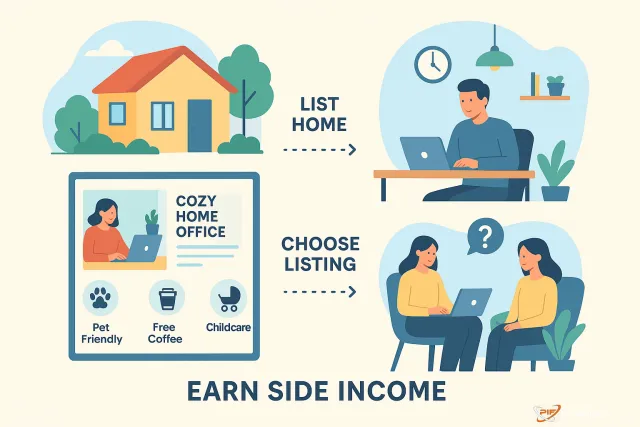
The residential coworking company allows you to work out of other individuals’ homes. These homes are set up in a style similar to Airbnb, where you reserve your workspace based on a catalog of homes and availabilities in your area. Each home host can include a range of different options for your working space in that home—such as a coffee bar, a private bathroom, or even permission to bring your trusted work dog or cat. Some homes might even offer onsite babysitting or childcare, helping remove the most common distractions from your own home. Because this is a residential model working with homeowners, the price of these coworking spaces is significantly lower than commercial coworking spaces, which must charge higher rates to cover expensive downtown leases.
What do you think?

The White Paper continued:
The business model is simple. Homeowners who want to host parts of their home list them on an online marketplace, complete with pictures, descriptions, and the added amenities they are willing to provide their remote-working guests. Guests then choose from the available listings, lock in dates and times that fit their schedules, and agree to the host’s terms of service. Conversely, homeowners must also agree to baseline terms that protect the guest’s safety and privacy.
This model ensures that individuals seeking remote workspaces gain comfort, quiet, and potentially unique amenities that commercial coworking spaces simply cannot compete with. That might mean being allowed to bring a pet, enjoying a cup of freshly brewed coffee in a cozy kitchen, or even accessing childcare services.
There are also multiple benefits for the listing homeowner. These are rooms that might otherwise sit empty during the day or weekends. Instead, they generate side income while allowing the homeowner to contribute to society in a meaningful way. A true win-win.
This is not to say there are no hurdles. Legal terms of service must clearly protect both homeowner and guest. As questions arise, the company will provide answers, resources, and dispute-resolution services. Still, the opportunity for both sides to benefit is undeniable.
Each region of the United States—let alone the global market—offers unique opportunities for both the parts of the home that are listed on the platform and the types of offerings guests would most appreciate. Generally, the listings include a space that is free from noise and distraction. The space may or may not come with basic office supplies like a desk, desk chair, or access to a printer or other office tools, depending on the listing and the homeowner who puts the listing up.
It is made clear in each listing whether there is a shared bathroom available with the homeowner and other coworkers, or if it is a truly private bathroom dedicated only to that coworking space. It is also clear whether or not food available in the kitchen is free for coworkers to utilize or if it is off-limits. Likewise, listings specify whether pets are allowed in any capacity and, if so, which species and breeds.
Listings also disclose whether the space is being audio- or visually recorded in any way. They specify whether the coworker has access to outlets, lighting, or other necessities. Finally, there is a section on the listing form where guests may ask additional clarifying questions in order to best understand the offering before locking in their booking.
The financials of this company mirror those of vacation rental sites. With every transaction, the platform takes a small percentage fee. This fee is low enough to keep the service accessible, but high enough to ensure consistent revenue and growth as the platform scales—ultimately enabling global expansion.
At the end of the day, the model is simple: homeowners earn side income while workers gain access to quiet, comfortable, distraction-free spaces. The platform grows with every successful connection, creating a network of residential coworking options that make remote work more sustainable, accessible, and enjoyable.